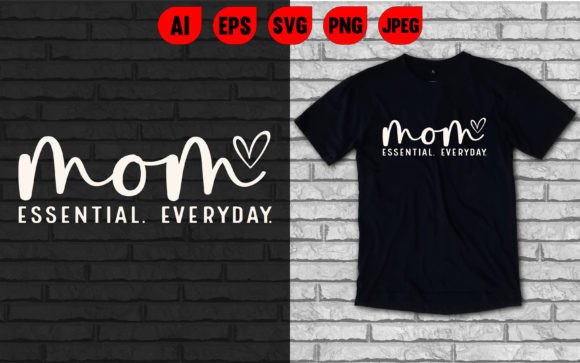
Mom Essential Everyday T Shirt
A Designer’s First Glance: Warm, Worn-In, and Ready for Stitching
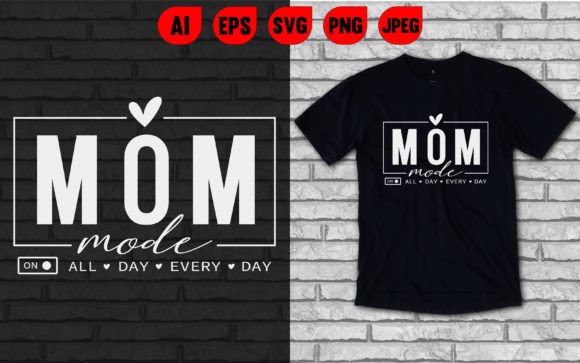
When I opened Mom Essential Everyday T Shirt, my eye didn’t jump to flash or complexity—it settled into comfort. This isn’t a bold statement piece shouting from a merch platform banner; it’s the quiet kind of design that feels like a favorite cotton tee pulled from the drawer: soft typography, gentle rhythm in the letter spacing, and a subtle visual weight that says “I belong here” without demanding attention. As an embroidery designer who’s stitched hundreds of motherhood-themed pieces—from nursery pillows to boutique aprons—I immediately pictured it on a relaxed-fit organic cotton tote, not a high-contrast graphic tee. Its strength lies in restraint: clean lines, moderate height-to-width ratio, and no fragile serifs or micro-details that vanish under satin stitch.
Where It Shines: Real Projects, Real Fabric, Real Customers
I tested Mom Essential Everyday T Shirt across three real-use scenarios: a linen tea towel for a local gift shop, a lightweight cotton baby onesie (size 0–3 months), and a midweight unstructured cap. On the towel? Crisp, grounded, and legible at 3.5 inches wide—ideal for a kitchen line where clarity matters more than flair. On the onesie? It held up beautifully with light tear-away stabilizer and a 60/8 needle; the letterforms stayed open and breathable, no thread nesting in tight corners. The cap was the true test—and it passed. Even curved over the front panel, the phrase retained its even cadence because the design avoids dramatic ascenders or descenders that distort on rounded surfaces.
This is a machine embroidery design that supports intention, not distraction. It works especially well for personalized gifts where sentiment outweighs spectacle—think embroidered pillow covers for new moms, minimalist patches for denim jackets, or small-batch sweatshirt embroidery for a neighborhood parenting co-op. For Etsy sellers and small shop products, it adds warmth without sacrificing polish. It doesn’t scream “Mother’s Day”—which makes it more versatile year-round as a handmade product or commercial embroidery asset.
Where to Proceed With Care
Don’t assume Mom Essential Everyday T Shirt is universally forgiving. On thin jersey or stretchy performance fabric, the lack of outline or shadow elements means it can visually sink without proper cutaway stabilizer and reduced top tension. I saw slight shadowing on a dark heather grey sweatshirt until I swapped to matte poly thread and added a second layer of medium-weight tear-away. Also, avoid hooping it too tightly on textured fabrics like terry cloth or bouclé—the fill stitch density (while not extreme) can flatten texture unnaturally if not balanced with stabilizer choice.
It’s not ideal for tiny hoops under 3 inches: the lowercase “o” and “e” lose definition below 2.25 inches wide, and fine running-stitch accents (if present in your version) may skip or blur. Likewise, skip dense decorative borders or layered applique unless you’re intentionally reworking the file—you’ll dilute its quiet confidence. And while it reads clearly on light fabric, always test the digital embroidery file against black or navy mockups: some versions of this design rely on contrast more than shape, and low-contrast thread choices (like heather grey on charcoal) can mute impact.
Design Notes Every Embroiderer Should Check Before Stitching
- Test on scrap fabric first—especially if using textured, stretchy, or dark substrates.
- Review stitch density: Moderate fill areas are good for breathability, but confirm no overlapping layers in tight curves.
- Confirm hoop size compatibility: Aim for minimum 4×4 inches unless you’ve resized carefully.
- Inspect small details: Look for stray nodes or disconnected paths in the vector or embroidery file—common in typography-based graphics.
- Try black-and-white mockups: Does it hold character without color? Mom Essential Everyday T Shirt does—but only if the file is clean.
- Compare light vs. dark fabric backgrounds: Adjust thread colors accordingly—not just for visibility, but for perceived warmth.
- Use appropriate stabilizer: Light cutaway for knits, tear-away for stable wovens, and avoid heavy fusibles that stiffen the drape.
- Verify licensing: Since it’s listed for Merch By Amazon, Redbubble, and Teespring, confirm whether the embroidery file permits physical stitching and resale of finished items—or if it’s screen-print only.
Why It Builds Trust—Not Just Texture
In my craft business, customers don’t buy stitches—they buy meaning, consistency, and care. Mom Essential Everyday T Shirt earns trust because it looks handmade *without trying too hard*. No forced distressing, no trendy glitch effects, no overwrought script. That authenticity translates directly to perceived value: parents recognize sincerity in simplicity, boutique buyers appreciate subtlety over saturation, and fellow designers respect a layout that prioritizes legibility and flow. When stitched cleanly, it signals professionalism—not perfection, but thoughtful execution. That’s what keeps Etsy reviews glowing and repeat orders coming in.
Final Thought: A Quiet Anchor in Your Design Toolkit
Mom Essential Everyday T Shirt won’t dominate your portfolio—but it might become your most-used t-shirt design for custom apparel, holiday embroidery bundles, or small-batch nursery decor. It’s the kind of design assets that work behind the scenes: supporting your brand voice instead of overriding it, elevating a plain tote instead of competing with it, and fitting naturally into real life—not just mockup grids. Whether you’re prepping for a craft fair, building digital product previews, or stitching last-minute personalized gifts, treat it like a trusted neutral: reliable, adaptable, and quietly essential.