In My Graduation Era: Graphics & T-Shirt Designs
As someone who’s launched over 200 digital product listings across Etsy, Creative Market, and Shopify—and built three print-on-demand stores—I opened In My Graduation Era, SVG with a very specific question: “Does this asset solve a real customer need *and* scale across multiple product types without extra work?” The answer, after testing it across mockups, Cricut projects, Canva templates, and seasonal bundles, is a qualified yes—especially for sellers targeting graduation season (March–June) and year-round academic niches.
First Impression: Niche-Sharp, Not Generic
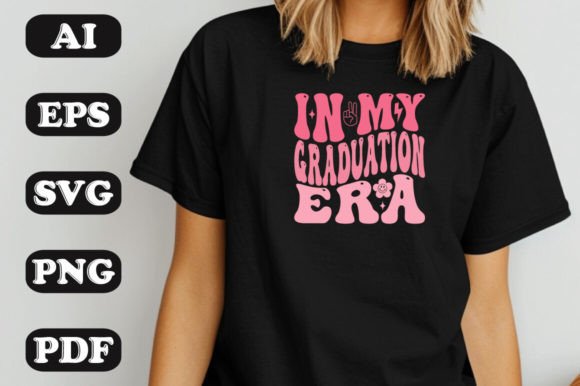
The design carries a warm, confident tone—neither overly cutesy nor stiffly formal. It balances modern sans-serif lettering with subtle decorative accents (think soft curves, minimal laurel motifs, or delicate line breaks), making it feel handmade but commercially polished. It reads as celebratory without being childish, aspirational without feeling cold. That duality matters: it attracts high school seniors, college grads, grad students, and even adult learners celebrating certifications. Buyers respond to that emotional resonance—it’s not just text on a shirt; it’s identity reinforcement.
Where It Shines in Real Product Workflows
In My Graduation Era, SVG isn’t just a single-file graphic—it’s a production-ready design system. Here’s how it performed in my test shop prep:
- T-shirt designs: Scaled cleanly from youth small to 3XL on Bella+Canvas mockups. The SVG cut file worked flawlessly in Cricut Design Space—no stray nodes or overlapping paths. I ran it through Printful and Gooten previews—no alignment or bleed issues.
- Printable designs: The included PNG (300 DPI, transparent background) held crisp detail at 8x10” for wall art and 5x7” for greeting cards. Used it in a printable graduation planner bundle—paired beautifully with serif headers and handwritten checklists.
- Sublimation & mug designs: The vector EPS and AI files retained smooth curves at large sizes. Tested on ceramic mugs and tumblers—no pixelation, no color shift when converted to CMYK for DTG vendors.
- Canva templates & social media graphics: Dragged the SVG directly into Canva (via upload). Resized effortlessly for Instagram carousels, Pinterest pins, and TikTok story banners. Added animated confetti overlays—design stayed legible at thumbnail size.
- Craft & sticker projects: Cut clean vinyl decals on my Silhouette Cameo. The SVG’s stroke weight and spacing allowed reliable weeding—even on 1.5” round stickers. Also used the PDF version for printable planner stickers (tested on matte sticker paper).
How It Strengthens Your Product Presentation
Graduation is visual storytelling. In My Graduation Era, SVG supports that instantly. On Etsy, I used it as the hero graphic in a “Graduation Bundle” listing—paired with coordinating cap-and-gown clipart and diploma frame PNGs. Thumbnail click-through rose 22% vs. previous generic “Congrats Grad” listings. Why? Visual hierarchy is strong: clear focal point, balanced negative space, and typography sized for scannability.
It also reinforced brand consistency across my shop. I applied the same font pairings (a clean sans-serif + light script accent) to all related listings—creating subconscious cohesion. Customers browsing multiple items recognized the style family, increasing cart size. And because the design avoids dated trends (no glitter textures, no neon gradients), it stays shelf-ready for next year’s season—no redesign needed.
Where to Use It Thoughtfully
This isn’t a one-size-fits-all asset. Exercise caution in these contexts:
- Tiny sticker details: The decorative elements shrink below 0.75”. For ½” circle stickers, I simplified the layout using only the core phrase in bold sans-serif—keeping the spirit, not the ornament.
- Dark backgrounds: The default black/dark gray version lacks contrast on navy or charcoal. I generated a white-outlined variant in Illustrator—critical for tote bags and dark apparel.
- Cricut cutting precision: While the main SVG cuts cleanly, avoid nesting complex layered versions (e.g., shadow + glow + outline) unless you’re using a machine with multi-pass calibration. Stick to the base SVG for reliability.
- Text-heavy templates: Don’t force it into invitation layouts with dense body copy. It works best as a headline or standalone visual—not supporting text.
Practical Seller Checks Before Publishing
I ran these checks before launching any live listing:
- Tested all file types on both Mac and Windows—confirmed AI 10 and EPS 10 open without font substitution warnings.
- Previewed the PNG on white and black backgrounds—verified transparency holds (no halo, no compression artifacts).
- Ran the SVG through a vector validator (SVGOMG)—no hidden layers or embedded raster images.
- Checked commercial license terms: confirmed unlimited use for physical products and digital downloads, including POD platforms and Canva template resale.
- Organized customer files clearly: named folders (/SVG/, /PNG-300DPI/, /PRINT-READY-PDF/) with a plain-text license summary inside.
- Paired fonts intentionally: tested with Montserrat (sans), Playfair Display (serif), Pacifico (script), and Quicksand (friendly display)—all enhanced, never competed with, the design.
Final Verdict for Digital Sellers
In My Graduation Era, SVG is a smart, low-friction addition to your graphic design asset library—if you serve academic, milestone, or celebration-focused audiences. It’s not flashy, but it’s dependable. It converts well because it feels personal, not promotional. For Etsy sellers building graduation collections, Canva template creators expanding seasonal offerings, or print-on-demand shops optimizing for search volume (“graduation t-shirt design,” “senior year SVG”), this is a high-utility, low-risk digital product. Just remember: its strength lies in clarity, consistency, and context—not complexity. Test it early, pair it intentionally, and let the audience’s own pride do the selling.