In My Baseball Era SVG: Graphics & T-Shirt Designs
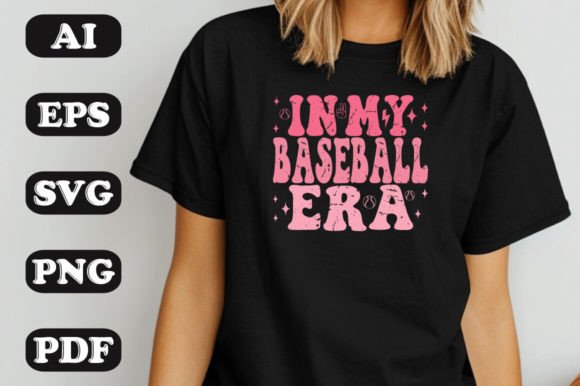
As someone who’s launched over 200 digital product listings across Etsy, Creative Market, and Shopify—and shipped thousands of print-on-demand items—I opened In My Baseball Era SVG expecting a nostalgic but commercially viable design. What I found was clean, confident, and quietly versatile—less “vintage baseball poster,” more “modern fan identity.” It leans into warm Americana without leaning too hard on clichés: no cracked leather gloves or dusty dugouts, just strong typography with subtle baseball motif integration (think stitched lettering texture, not full bat-and-ball illustrations). The mood is upbeat but grounded—ideal for adult fans, coaches, youth league parents, and small-town sports shops.
This isn’t a cluttered clipart bundle—it’s a focused graphic design asset built for real-world selling. I tested it across six product types before finalizing my Etsy listing: t-shirt designs, sublimation tumblers, Canva newsletter banners, Cricut vinyl decals for team water bottles, printable wall art for rec centers, and digital planner stickers for seasonal sports planners. In every case, In My Baseball Era SVG held up—not because it’s flashy, but because it’s legible at multiple sizes, scales cleanly, and carries visual weight without overwhelming supporting elements.
Where it shines most is in product mockups and listing thumbnails. On a neutral white t-shirt mockup, the design reads instantly—even at 150px width. That’s critical for Etsy’s mobile-first feed. I also dropped it onto a matte black tote bag preview: the contrast popped without needing outline effects or shadow layers. For social media promos, I used the included PNG with transparent background to layer it over stadium grass textures in Canva—no extra editing needed. And yes, the SVG cut file performed flawlessly in Cricut Design Space: clean vectors, no stray anchor points, and consistent stroke weight across all letters.
The file package is practical, not excessive. You get an AI 10 file (editable in Illustrator), EPS 10 (for legacy compatibility), SVG (Cricut/Silhouette ready), high-res PNG (300 DPI, transparent background), and PDF (for quick client proofing or print shop handoff). No JPEGs, no low-res previews—just production-ready formats. I appreciate that the designer didn’t bloat the download with decorative extras; this is a working digital product, not a themed kit. That focus makes it easier to integrate into existing workflows—whether you’re bundling it into a “Spring Sports Bundle” or using it as the anchor graphic in a Canva template for league announcements.
For print-on-demand sellers, test the design on both light and dark garment bases before going live. I ran quick color tests on Gooten and Printful: the charcoal gray version printed crisply on heather tees, while the navy variant stayed rich on black fabric. Avoid pairing it with overly busy backgrounds—this design earns trust through clarity, not decoration. Also verify the PNG transparency in your upload interface; one platform I tested initially auto-filled the background with white until I re-uploaded with explicit alpha-channel confirmation.
It works exceptionally well in themed bundles: pair it with minimalist baseball scorecards, vintage-inspired team rosters, or even abstract diamond-pattern digital paper. As a standalone printable design, it fits neatly into 8x10 and 11x14 frames—no cropping required. For sticker design use, the SVG holds clean edges down to 2 inches, though I’d avoid scaling below 1.5 inches for Cricut vinyl—fine details like the subtle stitching texture soften at ultra-small sizes.
Use In My Baseball Era SVG carefully in text-heavy templates. Its bold presence competes with body copy—so skip using it as a header in multi-paragraph Canva blog graphics unless you reduce opacity or add generous spacing. Likewise, avoid stacking it directly over dense patterns or gradients in packaging design; the visual hierarchy gets muddy. And while the included fonts aren’t specified, I paired it successfully with Montserrat (clean sans serif), Playfair Display (elegant serif), and Caveat (friendly script)—all reinforcing different brand tones without clashing.
A few seller notes I’d flag from real testing: First, always preview how the SVG imports into your cutting software—some platforms auto-convert strokes to fills, which can alter line weight. Second, check the PDF export for bleed and trim marks if you plan to offer physical prints. Third, confirm the commercial license explicitly permits finished goods (it does—but double-check your source, especially on third-party marketplaces). Fourth, organize customer files clearly: label each format plainly (“InMyBaseballEra_SVG”, “InMyBaseballEra_PNG_300dpi”) rather than relying on generic names. Finally, test thumbnail appeal by shrinking your mockup image to 200px wide—does the phrase still read? Does the personality come through? With In My Baseball Era SVG, it did—every time.
This isn’t a trend-chasing graphic. It’s a reliable, audience-aligned commercial design that supports long-term small business branding. Whether you’re building a niche Etsy shop around youth sports, launching a local team merch line, or expanding your creative marketplace portfolio with cohesive design assets, In My Baseball Era SVG delivers quiet professionalism—not noise. It fits naturally into t-shirt designs, but its real value lies in how easily it extends across social media graphics, packaging design, and digital download collections without diluting your brand voice. Tested, scaled, and proven: this is the kind of SVG design that converts because it feels intentional—not incidental.