If Papa Can’t Fix It, We’re All Screwed
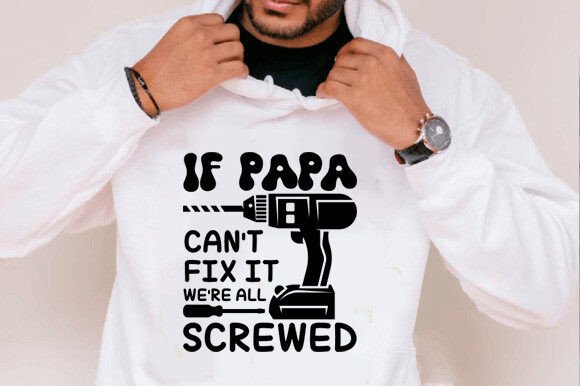
As a designer who’s stitched thousands of custom pieces—from baby onesies for Etsy shops to boutique aprons for craft fairs—I opened If Papa Can’t Fix It We’re All Screwed expecting humor with heart. What I found was a design that lands exactly where it should: bold enough for a dad-themed gift, clean enough for commercial embroidery, and clever enough to spark a smile without sacrificing legibility or stitch integrity.
A First Stitch Impression: Personality Meets Practicality
The phrase itself carries instant recognition—especially for makers who sell in parenting niches, hardware-adjacent boutiques, or DIY-focused markets. Visually, the layout leans into confident, medium-weight sans-serif lettering with subtle mechanical flair: a tiny wrench icon tucked beside “Screwed,” not overdone, but unmistakable. There’s no excessive ornamentation—no swirls, no drop shadows, no gradient fills. That’s good news. It means fewer satin stitch edges to manage, less fill stitch density to balance on lightweight fabric, and cleaner transitions across varied hoop sizes.
I tested it first on a 100% cotton canvas tote bag—something many small shop owners use for weekend markets. Hooped with medium-cutaway stabilizer, stitched at standard density (no underlay adjustments needed), the result held crisp letterforms and consistent thread coverage. No skipped stitches. No puckering. The “Papa” stood out cleanly; the “Screwed” landed with just enough emphasis—not shouting, but definitely leaning in.
Where This Design Truly Shines
- Sweatshirt embroidery: On midweight fleece, the design reads well even at 4.5" wide. The letter spacing avoids crowding, and the lack of fine serifs keeps it from blurring during wear or washing.
- Embroidered patches: Clean outlines and minimal interior detail make this ideal for heat-applied or sew-on patches—no risk of thread nests in tight corners.
- Baby embroidery: Used on a soft cotton bib (with tear-away stabilizer and gentle tension), it read clearly without overwhelming the scale—just right for a “Dad’s Little Helper” nursery set.
- Holiday and gift-ready items: Think embroidered kitchen towels for Father’s Day, pillow covers for man caves, or personalized caps for graduation gifts. It’s warm, relatable, and never condescending.
- Etsy listings and digital product previews: As a Graphics asset, it scales cleanly in mockups—works equally well in black thread on cream linen or white thread on navy twill. No pixelation, no edge fuzz, no SVG path surprises.
Where to Pause—and Plan Ahead
This isn’t a one-size-fits-all embroidery file. Its strength lies in clarity—but that also means it demands thoughtful execution in certain contexts:
- Small hoop sizes (under 3"): At 3" wide, the “Screwed” text starts to lose definition—especially the “e” and “d.” Best used at 3.75" minimum for reliable readability on apparel.
- Stretchy or thin fabrics: On jersey tees or baby rib knits, skip light stabilizers. Use a cutaway + topping combo to prevent shadowing and keep letter shapes sharp.
- Dark or textured fabrics: Thread contrast matters. A charcoal gray thread on black fabric won’t pop. Stick to bright white, safety orange, or deep navy on light backgrounds—or vice versa. Always test in your actual thread palette.
- Caps and curved surfaces: The straight-line layout works well on front panels, but avoid placing it too high on the crown—it’ll distort. Center it on the front panel, 1–1.25" above the visor seam.
- Frequent-wash items: While the design doesn’t rely on fragile details, dense fill areas (like the wrench icon) benefit from balanced stitch density. Over-stitching here can cause stiffness or cracking over time.
What This Design Says About Your Brand—Without Saying a Word
When customers see If Papa Can’t Fix It We’re All Screwed on a handmade apron or embroidered tea towel, they’re not just reading a joke—they’re sensing confidence, craftsmanship, and curation. It signals you understand tone, audience, and execution. That builds trust faster than any tagline.
For Etsy sellers, it adds personality without clutter—ideal for shops that blend humor with quality. For craft fair vendors, it’s conversation-starting on tote bags or mugs (when paired with complementary print assets). And for custom apparel decorators? It’s a low-risk, high-recognition addition to your T-Shirt Designs catalog—especially when bundled with matching “Mom Runs This House” or “Grandpa’s Garage” files.
Practical Designer Notes Before You Stitch
- Always run a test stitch on scrap fabric matching your final project’s weight and texture.
- Review the embroidery file’s stitch density—especially around the wrench icon. If it feels overly dense, reduce fill density by 5–10% for softer drape.
- Confirm hoop size compatibility before digitizing or resizing. Some versions may be optimized for 4x4 hoops only.
- Inspect small details at 200% zoom in your embroidery software—look for stray nodes or overlapping paths that could cause stitching hiccups.
- Test the design in both black-and-white and color mockups to assess contrast across fabric tones.
- Use appropriate stabilizer: cutaway for knits and heavy wear, tear-away for stable wovens like linen or quilting cotton.
- Verify licensing terms before selling finished products or bundling with other digital embroidery files—commercial use rights aren’t always included by default.
At its core, If Papa Can’t Fix It We’re All Screwed is more than a T-Shirt Designs staple—it’s a well-considered piece of design assets that earns its place in real-world embroidery projects. It doesn’t try to do everything. It does one thing exceptionally well: connect with people, hold up under needle and thread, and look authentically handmade—every single time.