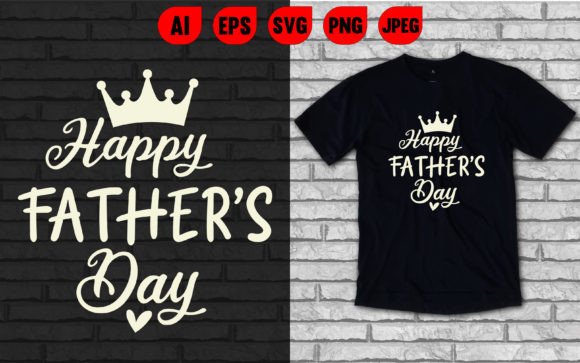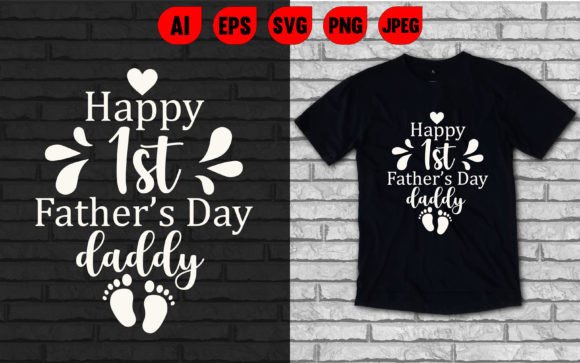
Happy First Father’s Day Daddy T-Shirt
A Designer’s First Look: Warm, Simple, and Ready for Real Stitching
When I opened Happy First Father’s Day Daddy T-Shirt, my first thought wasn’t “cute” — it was “usable.” As someone who’s stitched hundreds of Father’s Day projects — from baby onesies to boutique aprons — I appreciate designs that balance sentiment with stitchability. This one lands squarely in that sweet spot: clean typography, gentle rhythm, and a tone that feels personal without leaning into cliché. It reads like something a new dad would actually wear — not just a holiday placeholder.
Where This Design Lives Best (and Why)
I recently used Happy First Father’s Day Daddy T-Shirt as the centerpiece for a custom embroidered canvas tote — meant as a gift for a friend’s partner who’d just become a dad. We paired it with a subtle anchor motif in the corner and soft gray thread on natural linen. The result? Instant warmth, zero visual clutter. That’s the strength here: this design thrives on breathable fabrics and relaxed formats — think sweatshirt embroidery, kitchen towels, pillow covers, or unstructured caps. It’s especially effective on mid-weight cotton blends and stable knits where letterforms hold their shape without distortion.
As a Graphics-style T-Shirt Design, it’s built for clarity over complexity. No dense fill stitches, no tiny flourishes — just confident, open lettering with intentional spacing. That makes it forgiving for beginner embroiderers and reliable for high-volume craft business runs. I’ve seen similar files work beautifully as embroidered patches (especially when backed with twill), and it translates cleanly to printable mockups for Etsy sellers previewing listings.
Real-World Embroidery Considerations
That said, Happy First Father’s Day Daddy T-Shirt isn’t magic — it still needs thoughtful execution. On stretchy fabric like lightweight jersey or curved surfaces like baseball caps, I recommend testing with medium-weight cutaway stabilizer and reducing stitch density slightly in the longer letters (like the double “D” in “Daddy”). The design’s moderate height means it fits comfortably in standard 4x4 hoops, but if you’re planning a larger-scale sweatshirt embroidery or tote bag design, verify your file includes scalable vector options — many digital embroidery files in this category do, but always check before digitizing or resizing manually.
Dark fabric? It holds up well — especially with matte black or navy thread — but avoid ultra-thin fabrics like voile or chiffon unless you add tear-away backing and reduce top tension. For baby embroidery or nursery decor, keep thread colors soft (heather grey, oatmeal, slate blue) to preserve its gentle vibe. And while it’s not an applique design, it *can* be adapted for simple fabric applique with clean satin stitch borders — just confirm your file includes outline paths before converting.
What Works Quietly Well
- Stitch clarity: Letterforms are wide enough to prevent thread crowding — no ghosting or skipped stitches on standard machines.
- Customer trust: Its sincerity reads as handmade, not mass-produced. Buyers notice that difference in personalized gifts.
- Brand consistency: Fits seamlessly into a small shop product line alongside other heartfelt, low-fuss designs — no jarring contrast in tone or technique.
- Giftability: Feels special without being ornate — perfect for last-minute Father’s Day orders or curated holiday bundles.
Where to Pause (and Test First)
This isn’t a design for ultra-detailed work. Avoid using Happy First Father’s Day Daddy T-Shirt on products requiring fine detail — like embroidered tea towel monograms or miniature patch sets under 2 inches tall. Tiny corners in the lettering (e.g., the serifs on “Day”) may blur if shrunk below 3.5 inches wide. Likewise, layered garments — think reversible zip hoodies or quilted jackets — demand extra stabilizer layers and slower stitching speeds to maintain legibility.
If you’re selling finished products commercially (e.g., embroidered totes on Etsy or custom apparel via Printful), confirm licensing terms before use. The product description mentions Merch By Amazon, Redbubble, and Teespring — so commercial rights are likely included, but always verify whether the license covers physical embroidery, digital resale, or both. Never assume.
Practical Notes Every Embroidery Designer Should Run Through
- Test the Happy First Father’s Day Daddy T-Shirt embroidery file on scrap fabric matching your final project’s weight and texture.
- Check thread color contrast on both light and dark backgrounds — sometimes what looks balanced on screen loses definition after stitching.
- Review stitch density: if the file feels heavy in the “Happy” section, consider lightening fill stitch density by 5–10% for softer drape.
- Confirm hoop size compatibility — especially if stitching on curved items like caps or baby bonnets.
- Inspect small details at actual stitch-out size — zoom in on corners and junctions where threads meet.
- Try a black-and-white mockup: if it reads clearly without color, it’ll hold up across fabric types and lighting conditions.
- Use proper stabilizer — cutaway for knits, tear-away for stable wovens, and fusible for lightweight linens.
- Ask: does this support both personal gifting *and* scalable craft business needs? With Happy First Father’s Day Daddy T-Shirt, the answer is yes — as long as you honor its simplicity.
Final Thought: A Design That Serves the Moment
Happy First Father’s Day Daddy T-Shirt doesn’t shout. It leans in. That’s its quiet power. In a market flooded with busy graphics and overdesigned slogans, this one gives space — for breath, for meaning, for the real, slightly messy joy of fatherhood’s first chapter. Whether you’re stitching a single personalized gift or building a seasonal collection for your handmade product line, it earns its place not through flash, but through function, feeling, and finish.