Dibs on the Fireman
First Impressions: Playful, Proud, and Purpose-Built
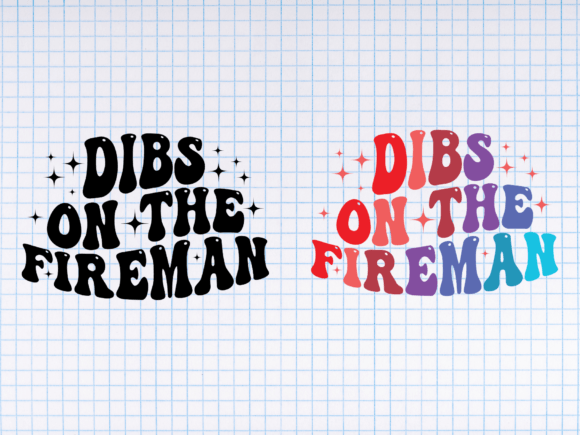
When I opened Dibs on the Fireman for the first time, I didn’t see just another T-Shirt Designs graphic—I saw a mood. It’s warm but confident, affectionate but grounded, with that unmistakable “groovy design” energy the description hints at. The font carries personality without sacrificing legibility—curvy but controlled, friendly but not childish. It reads instantly as *affectionate pride*, not irony or trend-chasing. That matters deeply when you’re stitching it onto something meant to be worn, gifted, or sold.
A Real-World Test: Embroidering a Personalized Tote for a Fire Department Fundraiser
Last month, I used Dibs on the Fireman to embroider a set of canvas tote bags for a local fire department’s annual fundraiser. These weren’t novelty items—they were premium handmade products sold alongside gear and apparel at a community event. So I treated the design like a client project: tested on scrap canvas first, checked thread contrast against both navy and red fabric backgrounds, and verified stabilizer pairing (medium-weight cutaway worked best). What stood out wasn’t just how clean the lettering stitched out—it was how naturally the phrase landed on the bag’s front panel. The width-to-height ratio fits comfortably in a 4x4 hoop without cramming, and the curves flowed smoothly under satin stitch without puckering or distortion.
Where It Shines—and Where It Needs Thought
Dibs on the Fireman performs exceptionally well on stable, medium-weight fabrics: sweatshirt fleece, cotton twill, denim, and even medium-weave tea towels. As a machine embroidery design, it translates cleanly into fill stitch and satin stitch lettering—no thin serifs or fragile connectors to snap mid-stitch. That makes it reliable for custom apparel, embroidered patches, aprons, and pillow covers where clarity and durability matter.
It also works beautifully in baby embroidery—think onesies or burp cloths—when sized down to 3.5" wide. The rounded forms soften nicely at smaller scales, and the phrase itself carries gentle, heartfelt meaning without being overly literal or cutesy.
But here’s where practical judgment kicks in: avoid using Dibs on the Fireman on highly textured fabrics like bouclé or thick terry cloth unless you’ve tested stabilizer layers thoroughly. Also skip it on ultra-thin fabrics (like lightweight rayon challis) without backing reinforcement—the open spacing between letters can cause thread pull-through. And while it reads clearly on dark fabric, always test your chosen thread color in natural light; some “fire engine red” threads dull on black fleece, losing warmth.
What It Adds to Your Finished Product
This isn’t just a digital embroidery file—it’s a subtle value amplifier. When stitched cleanly, Dibs on the Fireman elevates a plain sweatshirt into a personalized gift. It signals care in execution and emotional resonance in concept. Customers notice that. Etsy sellers tell me buyers comment specifically on how “real” and “thoughtful” the phrase feels—not generic, not forced. That builds trust. For small shop owners and craft fair vendors, that authenticity translates directly into repeat engagement and word-of-mouth referrals.
It also supports brand consistency. If your shop specializes in first-responder appreciation designs—or even broader themes of love, service, and quiet strength—Dibs on the Fireman fits seamlessly alongside other design assets. It doesn’t shout; it leans in. That makes it versatile across holiday embroidery (Valentine’s Day, Father’s Day), wedding gifts for firefighter couples, or even nursery decor when paired with soft blues and reds.
Designer Notes You’ll Actually Use
- Always test first. Run a sample on your target fabric + stabilizer combo—even if it’s the same material you’ve used a dozen times before. Thread tension shifts happen.
- Check stitch density visually. Zoom in on the design preview: are the fills dense enough for your fabric weight? Too sparse = visible backing; too dense = stiffness and wear risk.
- Confirm hoop size compatibility. While Dibs on the Fireman fits standard 4x4 hoops comfortably, double-check your own machine’s max dimensions—especially if you plan to resize up for caps or down for baby hats.
- Inspect corners and curves. Look for any tight vector points that could translate into skipped stitches or thread breaks. This design handles them gracefully, but don’t assume.
- Mock it up in black and white. A printable mockup on both light and dark backgrounds reveals contrast issues faster than any screen preview.
- Review licensing before selling. Since this is a Graphics digital embroidery file, confirm whether commercial use is permitted for finished products—and whether resale of the digital file itself is allowed. Don’t guess.
Final Thought: Not Just a Phrase—A Feeling You Can Stitch
As an embroidery product reviewer who’s evaluated hundreds of designs, I can say this plainly: Dibs on the Fireman earns its place in a working designer’s library because it balances charm with craftsmanship. It’s not trying to be everything—it knows its voice, its audience, and its ideal context. Whether you’re stitching a last-minute birthday gift for a firefighter’s partner, building a cohesive line of first-responder merchandise, or curating a boutique collection of heartfelt apparel, this design delivers consistent, professional results. It reminds us that the best embroidery files aren’t just technically sound—they carry intention, warmth, and quiet confidence. And that’s exactly what shows up on the finished product.